

Parking in Amsterdam: The Complete Guide
Published • Mon, Mar 2, 2026
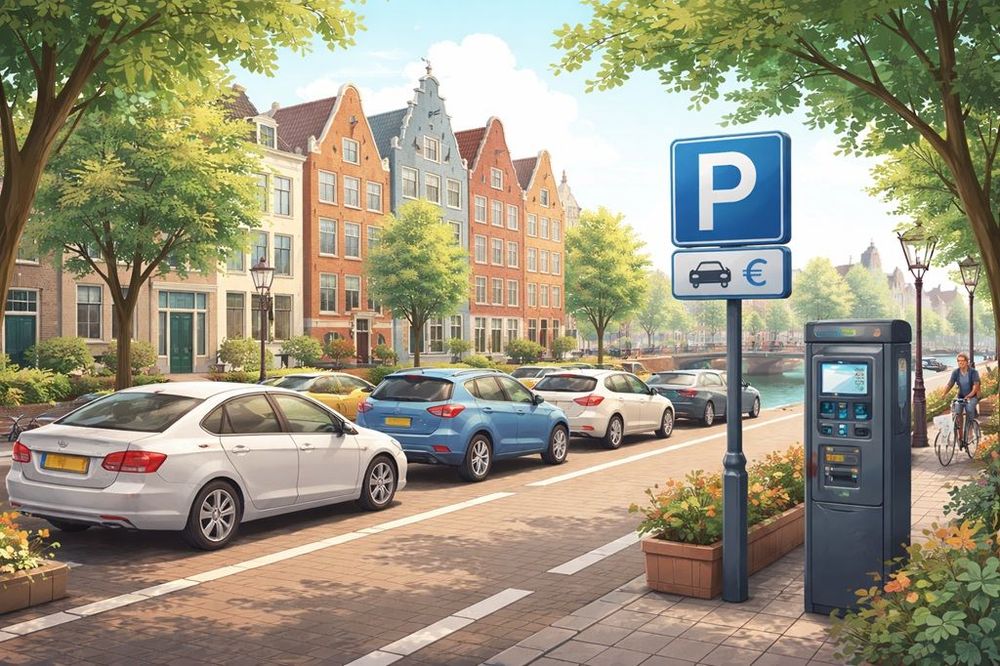
Everything expats, corporate professionals, and new arrivals need to know about parking in Amsterdam — zones, costs, permits, garages, apps, and how to avoid the fines.
Let's get the uncomfortable truth out of the way early: Amsterdam is one of the most expensive cities in Europe to park in, and it's been getting more restrictive, not less. The city has removed roughly 11,000 on-street spaces since 2019 as part of a long-term plan to reduce car traffic, and that process continues through 2030. If you've arrived from somewhere that still considers parking a basic right, this will require some adjustment.
That said, it's entirely manageable once you know the system — and this guide gives you the full picture. Whether you're a newly arrived expat trying to figure out what to do with your car, a corporate professional on a temporary assignment, or a City Retreat tenant who drove here and is wondering why there's no obvious place to leave your vehicle, you'll find what you need here.
We cover street parking rates and zones, P+R (Park & Ride), parking garages, resident permits, the low-emission zone rules, the best apps to use, and how to filter for apartments that include parking. One step at a time.
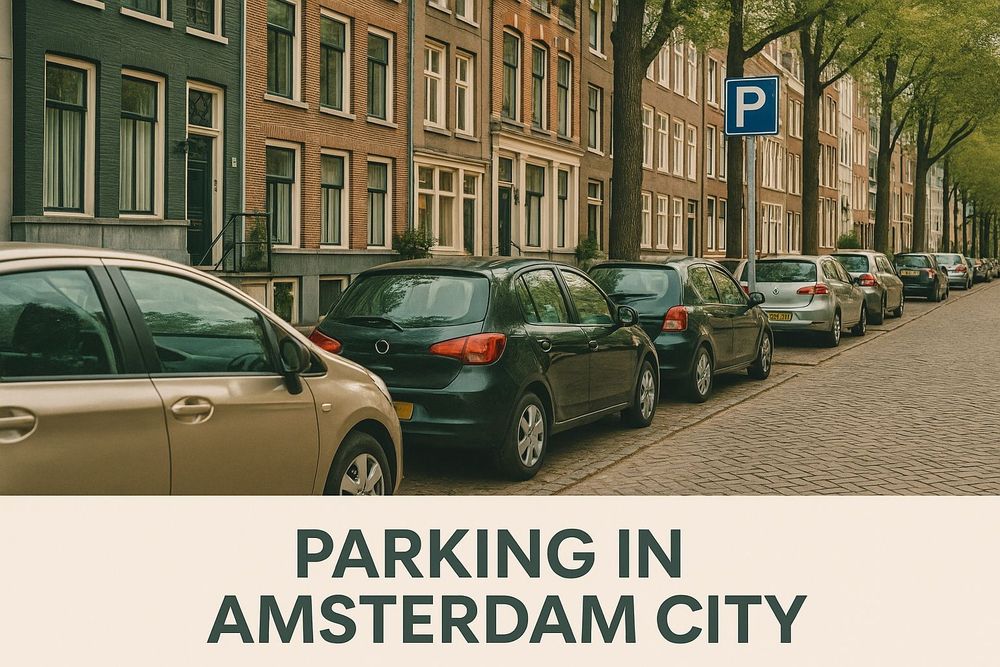
How Parking in Amsterdam Works
Amsterdam divides the city into 26 different paid parking zones, each with its own rate and enforcement hours. As a general rule: the closer you are to the city centre, the more it costs and the longer the paid hours run. Most central areas operate paid parking Monday through Sunday until midnight. Free street parking inside the A10 ring road is genuinely rare.
All street parking in Amsterdam is licence-plate based. There are no paper tickets to display — enforcement officers scan plates as they patrol. This means you simply pay via a parking machine or app, enter your licence plate, and you're covered. It also means there's no getting away with it.
Street parking in central Amsterdam currently ranges from €5 to €8.05 per hour, with the inner canal belt at the top end. Further out, rates drop — some outer zones are as low as €0.20/hr or even free at certain times. A full day of street parking in the centre can comfortably exceed €60–80. For expats and corporate tenants arriving with a car, this adds up fast. The sections below cover your better options.
| Zone / Area | Approx. Hourly Rate (2026) | Paid Hours |
|---|---|---|
| Inner canal belt / Centrum | €7.50 – €8.05 | Mon–Sun until midnight |
| Jordaan, De Pijp, Oud-West | €6.00 – €7.00 | Mon–Sun until midnight |
| East (Oost), South (Zuid) | €3.50 – €5.50 | Typically Mon–Sat, hours vary |
| Noord, Nieuw-West (A10 ring) | €1.60 – €2.80 | Mon–Sat 9:00–19:00 |
| Outer zones / beyond A10 | €0.10 – €1.50 (some free) | Varies widely — check signage |
Rates change periodically and vary street by street. Before parking anywhere, always check the blue tariff signs on the pavement — they show the exact rate and hours for that specific street, and they take precedence over any general zone information. The Amsterdam municipality also has an interactive parking map at amsterdam.nl where you can look up any address.
Street parking is free throughout Amsterdam on Koningsdag (King's Day, 27 April 2026). Some outer district zones are also free on Sundays and on official public holidays — but this is far from universal. Never assume: always check the sign for your specific street.
How to Pay — Machines, Apps & Cards
Cash is no longer accepted at Amsterdam parking machines. All street parking payments are digital — by card at the machine, or via a parking app on your phone. The app route is genuinely the better option for most people: you only pay for the time you actually use, you can stop your session remotely, and you get a notification before your time runs out.
Parking Apps for Amsterdam
Three apps are officially approved for on-street parking payment in Amsterdam. All work on a licence plate basis and integrate with the city's digital enforcement network.
EasyPark (formerly Parkmobile)
Europe's largest parking app, available in 20+ countries. Works for on-street parking, garages, and EV charging. Useful if you travel frequently within Europe — one app covers you across the continent.
Best for frequent travellersYellowbrick
The original Dutch parking app, deeply integrated across the Netherlands. Works at Q-Park garages, on-street, and at Schiphol. A pay-per-use model with a small transaction fee; also has business accounts for company vehicles.
Most widely used in NLParkBee
Focuses on private parking garages and longer-stay options. Particularly good for finding cheaper alternatives to street parking — it locates available spots in nearby private car parks at lower daily rates.
Best for cheaper garagesWith a parking machine you pay upfront for a fixed block of time. With an app, you start a session when you park and stop it when you leave — so you only pay for the exact time you use. If your errand takes 40 minutes instead of the hour you guessed, the app saves you money automatically. Most expats in Amsterdam switch to app-based parking quickly and never look back.
Parking Fines
Amsterdam's enforcement is thorough. Officers patrol on foot and in enforcement vehicles with automatic plate recognition. A parking fine in 2026 is €79.10 plus the applicable hourly tariff for that zone. In the city centre, that typically means a fine of well over €85 in total. Vehicles blocking priority routes can be towed — and recovering a towed vehicle involves a separate fee on top of the fine.
Central Amsterdam Parking Garages
Parking garages in central Amsterdam are typically priced similarly to street parking — but they have one useful advantage: you pay when you leave rather than upfront, so you don't need to estimate your time. They're also more practical for longer stays, and some offer pre-bookable daily rates that work out cheaper than paying by the hour on the street.
| Garage | Location / Nearest Landmark | Capacity | Hours |
|---|---|---|---|
| Bijenkorf / Beursplein | Damrak, city centre | 487 spaces | 24 hours, 7 days |
| Centrum Oost (Q-Park) | Valkenburgerstraat 238 | 220 spaces | Mon–Sat extended; check website |
| Parking Oosterdok | Near Amsterdam Centraal, NEMO | Large multi-storey | 24 hours, 7 days |
| Waterlooplein (Stopera) | Waterlooplein 28 | 385 spaces | 24 hours, 7 days |
| Van Baerlestraat (Museumplein) | Under Museumplein, near Rijksmuseum | 600 spaces | Mon–Thu/Sun until 1:00; Fri–Sat until 2:30 |
| Marnixstraat | Leidseplein area | 800 spaces | Mon–Wed until 1:00; Thu–Sat 24 hours |
| Tesselschadestraat | Near Vondelpark, Leidseplein | 456 spaces | 24 hours, 7 days |
Standard garage rates typically run €4–8 per hour, with daily maximums of €30–50 on weekdays. Some garages — including Q-Park Weesperplein and Centrum Oost — offer reduced daily rates of around €15 on Saturdays and Sundays (vs. ~€30 on weekdays). Booking through Parclick, ParkBee, or direct garage websites can knock significant amounts off walk-up rates, particularly for stays of 5+ hours.
P+R: The Smart Option for Longer Stays
If you're arriving in Amsterdam from outside the city — for a day trip, a meeting, or bringing visitors in — P+R (Park and Ride) is the most cost-effective option by a significant margin. Amsterdam has 10 official P+R locations around the A10 ring road, each with direct metro, tram, or bus connections to the city centre. You park on the outskirts, hop on public transport, and arrive in the centre within 20–30 minutes.
The rate is either €6 per 24 hours (off-peak: weekday arrivals after 10:00, or anytime on weekends) or €13 for the first 24 hours (peak: weekday arrivals before 10:00). Compared to €60+ for central street parking, the savings are stark. Maximum stay at most P+R locations is 96 hours (4 days), with P+R RAI limited to 24 hours.
The discounted P+R rate only applies if you actually travel into Amsterdam's central zone by public transport using an OV-chipkaart or paper GVB ticket. The system checks your public transport check-ins at the payment terminal when you collect your car. If you park at a P+R and don't travel into the centre — or use a bank card / phone to tap in rather than an OV-chip — the regular hourly rate applies. That can mean a bill many times higher than expected. Use your OV-chipkaart and travel into the designated central zone on every trip.
Main P+R Locations in Amsterdam
Large capacity. Metro 53 or 54 to centre. Note: diesel vehicles with emission standard 4 or lower are not admitted.
Metro to centre ~15 minMax 24 hours at P+R rate. Metro 52 or Tram 4/5/24 to centre. During RAI events this location may be closed — check in advance.
Tram/Metro ~10 minOne of the most accessible from the A10 west. Train or tram to city centre. Also accessible to diesel vehicles not admitted at other P+R sites.
Train/Tram ~12 minMetro 53 or 54 to the centre. Also accessible to diesel Euro 4 vehicles. May have limited availability on match days at the Johan Cruyff Arena.
Metro ~20 minOpen Friday 18:00 – Monday 04:00 only. €6 per 24 hours. Tram 7 or Bus 21 to centre. Useful when other P+R sites are full at weekends.
Weekends only · Tram ~20 minSeveral free (or very cheap) P+R sites exist beyond the A10, reachable by train. Weesp → Amsterdam Centraal by train in 16 min. Nieuw-Vennep → Centraal in ~32 min via Schiphol.
Free parking · Train into cityUp-to-date availability at all P+R sites can be checked in real time on the official Amsterdam municipality website. The A10 ring road itself has variable message signs showing which P+R locations have spaces.
Resident Parking Permits
If you're living in Amsterdam on a longer stay — whether that's a six-month corporate assignment or a multi-year relocation — a resident parking permit (bewonersparkeervergunning) is the most practical long-term solution for avoiding hourly street parking costs. The permit is digital, linked to your licence plate, and allows you to park on your designated zone's streets without paying the standard rate.
Eligibility
To qualify for a resident parking permit in Amsterdam you need to be: (1) officially registered at your Amsterdam address in the BRP (Basisregistratie Personen), (2) the registered owner or sole authorised user of the vehicle, and (3) without access to private parking at or associated with your residence. If you're renting a property that offers a private parking space — even optionally — and you decline it, you are not eligible for a street permit.
There is also an environmental requirement: diesel vehicles must meet emission standard 5 or higher; other fuels must meet standard 4 or higher. Electric vehicles get priority on the waiting list, which matters in central areas where waits can exceed 12 months.
A resident parking permit requires BRP registration, which requires a BSN. If you've just arrived, getting registered is step one. City Retreat tenants can register from day one of their tenancy — read our full guide to BRP registration and getting your BSN for the complete process.
Waiting Lists and Costs
Waiting times vary significantly by neighbourhood. Central areas like the canal belt and De Pijp can have waiting lists of over a year. Outer districts are typically shorter. Permit costs are charged every six months and range from around €30 to €270 per six months depending on your zone — a fraction of what you'd pay for daily street parking. You can check the waiting list and cost for your specific address on the Amsterdam municipality website using their address finder tool.
Visitor Parking
As a registered Amsterdam resident — even if you don't own a car — you can apply for a visitor parking permit (bezoekersparkeervergunning). This allows your guests to park near your address at a significantly reduced rate (50–65% off the standard tariff in most areas). Most residential areas provide 150 hours per quarter, resetting every three months, with up to 5 visitors parking simultaneously. You apply through amsterdam.nl using your DigiD account — the GuestPark app can help manage the hours once you have the permit.
While waiting for a resident permit, your best options are: (1) a long-term garage subscription — operators like Q-Park and APCOA Parking offer monthly plans that work out far cheaper than paying by the hour; (2) a private parking space rented from a neighbour or nearby commercial property via platforms like Mobypark; or (3) considering whether you actually need the car in Amsterdam at all — for many expats, a good OV-chipkaart and the occasional car-share service covers most needs more cheaply.
Amsterdam's Low-Emission Zone — Does Your Car Qualify?
Amsterdam operates a low-emission zone (millieuzone) covering the area within the A10 ring road. This applies to passenger cars as well as vans and lorries. If you're driving a diesel vehicle, this is important to check before you arrive.
You can drive and park anywhere in Amsterdam. No emission zone concerns for passenger cars running on petrol, LPG, or electricity.
Diesel cars meeting emission standard 5 or higher can drive and park within the A10 ring road. Check your vehicle registration documents — the Euro standard is shown there.
You cannot drive within the A10 ring road. Fine: €130 for passenger cars. P+R sites at Sloterdijk, RAI, Arena, and VUMC are outside or exempt from the zone and accessible to these vehicles.
The fine for violating the emission zone rules is €130 for passenger cars and vans, €90 for mopeds, and €320 for lorries. You can check whether your specific vehicle is permitted by entering its licence plate number on the Amsterdam municipality website. The A10 ring road itself is allowed — the ban applies inside it.
From January 2025, vans and lorries entering the area within the S100 city ring road (inner canal belt) must be emission-free (electric or hydrogen). For vehicles registered before 2025, transitional arrangements apply depending on Euro standard. Expats using a company van or rental vehicle should check the official Amsterdam LEZ checker before driving into the centre.
Apartments with Parking — and What to Know
A handful of our Amsterdam serviced apartments include a private parking space. If having a parking space is a priority — whether for a company vehicle, regular UK commute via the Rotterdam ferry, or simply peace of mind — you can filter specifically for this when searching our available properties. Apartments with parking do tend to book up quickly, so it's worth enquiring early.
For tenants in apartments without parking, the good news is that all City Retreat apartments come with BRP registration support from day one — meaning you're eligible to apply for a resident parking permit as soon as you're registered. We're happy to advise on the process and what to expect for your specific neighbourhood.
Do You Actually Need a Car in Amsterdam?
This might not be what you want to hear if you've just driven here, but it's worth asking honestly: Amsterdam is one of the most well-connected cities in Europe by public transport and cycling. The GVB network covers trams, metros, buses, and ferries. The OV-chipkaart is your single card for all of it. For the vast majority of day-to-day life in the city — commuting, supermarkets, social life — you genuinely don't need a car.
For expats and corporate professionals on temporary accommodation or expat rentals in Amsterdam, the calculation is often: keep the car for trips back home or out of the city, and use public transport for everything within Amsterdam. Many of our tenants find that a combination of an OV-chipkaart, occasional car-share (MyWheels or Sixt Share both operate in Amsterdam), and a decent bicycle covers every practical need — at a fraction of the cost of parking a car in the city daily.
A single card covers trams, metro, bus, and ferry in Amsterdam. A 7-day unlimited pass costs €42.50. Buy a personal OV-chip for long stays — cheaper per journey and reloadable online.
Most practical for city lifeAmsterdam has good car-share coverage. Pay per hour or per kilometre. Useful for IKEA runs, day trips, or airport drops — without the cost of owning and parking a car full-time.
No parking costsRent a private garage or space from a neighbour or nearby business. Monthly rates are significantly cheaper than hourly street parking, and you have a guaranteed spot. Good bridge while on the permit waiting list.
mobypark.comFrequently Asked Questions
Free street parking inside the A10 ring road is genuinely rare. Some outer zone streets are free overnight or on Sundays, but this varies by zone — always check the sign for the specific street. Amsterdam-wide free parking only applies on Koningsdag (27 April). Beyond Amsterdam's borders, several free P+R car parks exist (Muiden, Haarlem Spaarnwoude, Nieuw-Vennep), from which you can take the train or bus into the city.
Yes — if you're officially registered at the address in the BRP. City Retreat tenants can register their address from the first day of their tenancy contract, which means you're eligible to apply for a resident permit as soon as your BSN registration is processed. The key requirement is that your accommodation doesn't provide a parking space; if your City Retreat apartment includes parking, that apartment would not qualify for an additional street permit.
For paid street parking and garages, no — you enter your licence plate at the machine or app regardless of which country it's from. The emission zone rules also apply to foreign-registered vehicles, so a UK-registered diesel car must still meet the correct emission standard to enter the LEZ. For resident permits, you need a Dutch vehicle registration (kentekenbewijs) in your name — foreign-plated vehicles are not eligible for a resident street permit.
Most P+R locations allow a maximum stay of 96 hours (4 days) at the discounted P+R rate. P+R RAI is an exception — maximum 24 hours. After the maximum period, the standard (much higher) hourly rate kicks in automatically. If you need to leave a vehicle for longer than 4 days, a long-term garage subscription or a private Mobypark rental is a better option.
This depends entirely on your employer's relocation policy. Some corporate packages include a parking allowance or cover a garage subscription; others don't. Worth asking your HR or relocation contact before you arrive. If parking is important to your assignment, City Retreat has a small number of corporate housing Amsterdam apartments that include a parking space — worth specifying when you or your company enquires.
Harder, as a long-term trend. Amsterdam has removed approximately 11,000 on-street parking spaces since 2019 as part of its Mobility Approach 2030 plan, which aims to convert former parking space to cycling infrastructure, green areas, and pedestrian zones. Nearly all remaining free zones in Noord within the A10 ring are now paid, and further reductions are planned. Resident permit waiting lists in popular central neighbourhoods have lengthened as a result. If you're in Amsterdam long-term and car access matters, planning ahead is important.
Blue zones (blauwe zones) are designated areas where standard paid parking doesn't apply, but free parking is limited to a stated time window — typically 1–2 hours. You must display a blue parking disc showing your arrival time. These discs can be bought at police stations, petrol stations, and some tobacconists. Blue zones are uncommon in central Amsterdam but occasionally appear in residential outer areas. If you see a blue kerb marking with a sign showing a clock, you're in a blue zone.
Looking for Amsterdam Accommodation with Parking?
A handful of City Retreat's Amsterdam serviced apartments include private parking. All come with a formal tenancy agreement that supports BRP registration from day one — giving you the fastest route to a resident parking permit when you need one.
View Available Apartments